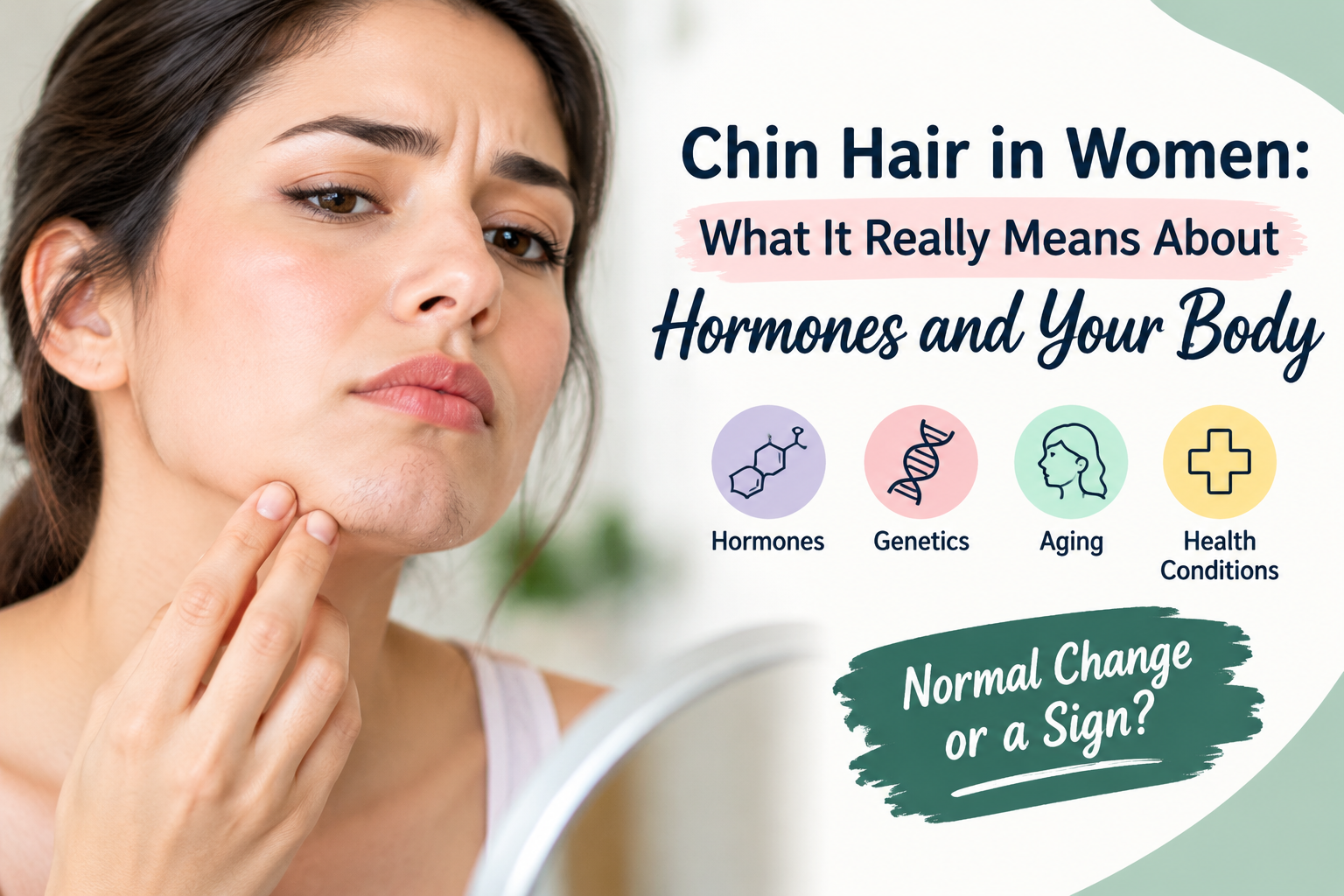
The first time many women notice a thick hair growing on their chin, the reaction is usually surprise. A quick look in the mirror can bring up questions:
“Why is this happening?”
“Is something wrong with my hormones?”
“Does this mean I am getting older?”
The truth is that chin hair in women is much more common than many people realize. A few unexpected hairs do not automatically mean there is a serious problem. Sometimes it is simply a normal change caused by genetics, aging, or natural hormone shifts. Healthline
But in some cases, changes in facial hair growth can provide clues about what is happening inside the body.
Why Do Women Grow Chin Hair?
Hair growth is controlled by many factors, including genetics and hormones. Women naturally produce hormones called androgens, including small amounts of testosterone. These hormones influence how hair follicles behave.
When hair follicles become more sensitive to these hormones, fine facial hair can sometimes become darker, thicker, and more noticeable. Healthline
This does not mean a woman has “too many male hormones.” The body is constantly balancing different hormones throughout life.
Age and Hormonal Changes Can Play a Role
Many women notice new chin hairs appearing in their 30s, 40s, or later years.
During periods such as perimenopause and menopause, estrogen levels naturally change. These shifts can affect the balance between different hormones and make facial hair more noticeable. Cleveland Clinic
At the same time, some women may notice changes in:
- Skin texture
- Hair thickness
- Scalp hair growth
- Body hair patterns
These changes are often a normal part of aging.
When Chin Hair May Be Linked to Hormone Imbalance
While occasional chin hair is usually harmless, sudden or excessive facial hair growth may sometimes be connected to hormonal conditions.
Possible signs that deserve attention include:
- Rapid increase in facial hair
- Thick dark hair appearing on the chin, jawline, or upper lip
- Irregular menstrual cycles
- Increased acne
- Unexplained weight changes
- Hair thinning on the scalp
One condition often associated with excess facial hair is PCOS, a hormonal condition that can affect androgen levels. Medical News Today
Genetics Can Also Be the Reason
Sometimes the answer is simply family history.
If your mother, sisters, or female relatives experience facial hair growth, you may naturally have similar hair patterns.
Every person’s hair follicles respond differently to hormones. Two women can have the same hormone levels but completely different hair growth patterns.
Common Myths About Chin Hair
Myth 1: Chin Hair Means Something Is Wrong
Not always.
A few random hairs can be completely normal and may only reflect natural body changes.
Myth 2: Shaving Makes Hair Grow Back Thicker
Shaving does not increase the number of hairs or change how fast they grow. It only cuts the hair at the surface, which can make the new growth feel slightly different. Good Housekeeping
Myth 3: Chin Hair Makes Someone Less Feminine
Hair growth is a biological process, not a measure of beauty or femininity.
Many women experience facial hair at some point in their lives.
Ways Women Manage Chin Hair
Depending on personal preference, women may choose different methods:
Tweezing
Useful for removing a few individual hairs.
Shaving
A simple option for quick removal.
Waxing
Can remove multiple hairs at once.
Laser Hair Removal
May provide longer-lasting results for some people.
Medical Treatment
If hormonal imbalance is suspected, a healthcare professional can help identify possible causes and treatment options.
When Should You Talk to a Doctor?
Consider getting medical advice if:
- Hair growth appears suddenly
- Facial hair becomes much heavier than before
- You notice other hormone-related changes
- Periods become irregular
- Acne suddenly increases
A doctor can look at your overall symptoms instead of focusing only on chin hair.
Final Thoughts
Finding chin hair can feel surprising, but it is often a normal part of being human. Hormones, genetics, and aging all influence how hair grows.
Instead of immediately worrying, pay attention to changes in your body. A few hairs may simply be a normal variation, while sudden changes may be worth discussing with a healthcare professional.
Understanding your body is the first step toward feeling confident and informed.