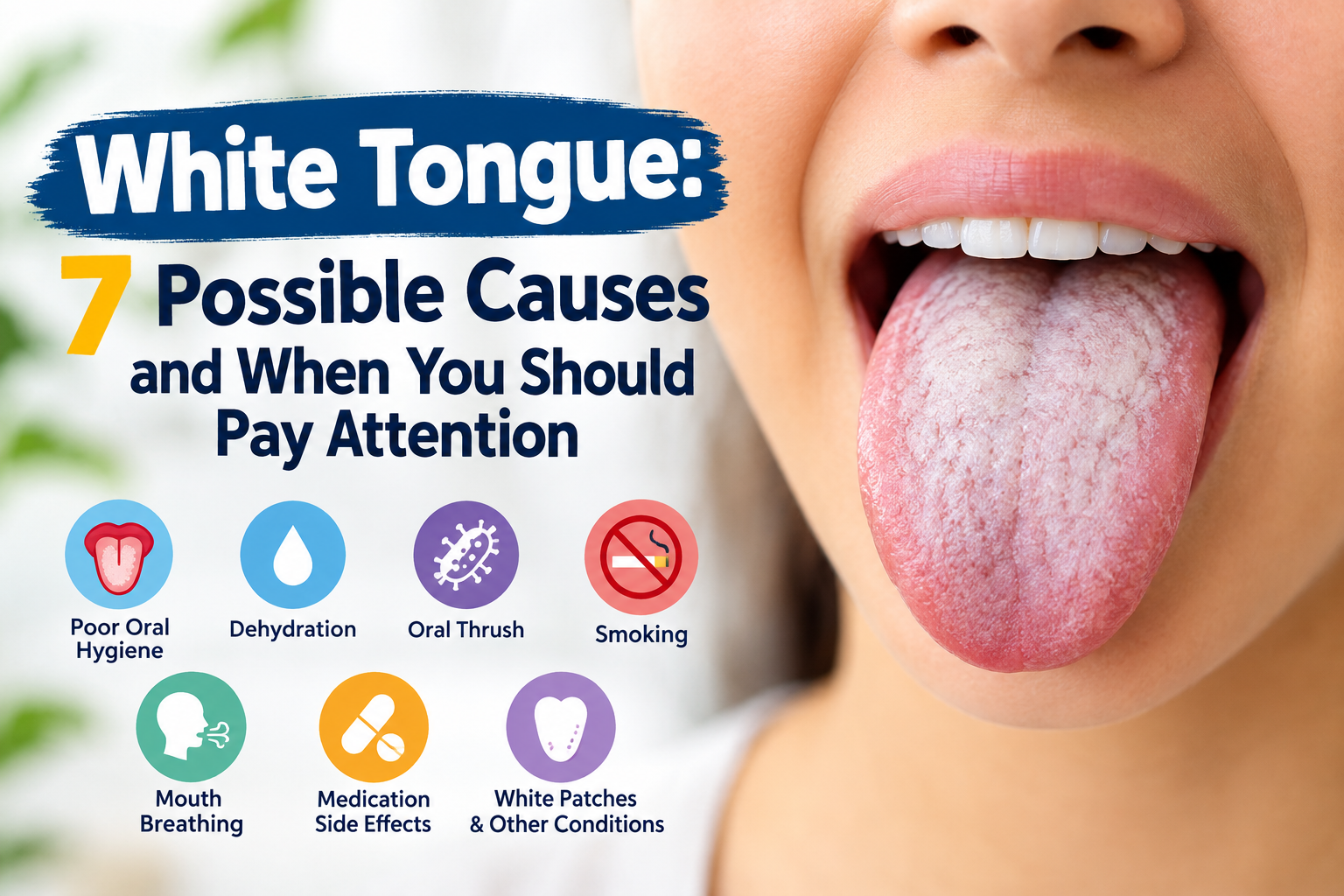
Have you ever looked in the mirror and noticed that your tongue has developed a white coating? It can be surprising, especially when your tongue usually appears pink. Although this change is often temporary, it may leave you wondering whether something is happening inside your body.
A white tongue is not automatically a sign of a serious illness. In many cases, it develops when bacteria, food particles, and dead cells collect between the tiny bumps on the tongue’s surface. However, certain infections and other oral conditions can also cause white patches.
Understanding the possible reasons behind this change can help you decide what to do next. Here are seven potential causes of a white tongue, practical oral care tips, and warning signs that deserve professional attention.
What Does a White Tongue Actually Mean?
The surface of your tongue contains tiny structures called papillae. These structures help you taste food and give your tongue its familiar texture.
Sometimes, papillae become enlarged or trap debris, making the tongue look white or coated. This can happen because of everyday habits, a dry mouth, or an underlying oral condition.
The appearance alone cannot confirm a diagnosis. The thickness of the coating, how long it lasts, and whether you experience pain or other symptoms all matter.
1. Inadequate Oral Hygiene
One common reason for a white tongue is the buildup of bacteria, dead cells, and food particles.
Brushing your teeth without cleaning your tongue may allow debris to accumulate over time. You might also notice unpleasant breath or an unusual taste in your mouth.
What may help: Brush your teeth twice daily, floss regularly, and gently clean the surface of your tongue with a soft toothbrush or tongue scraper. Avoid aggressive scraping, which can irritate delicate tissue.
2. Dehydration and Dry Mouth
Your mouth needs sufficient moisture to help clear away food particles and maintain a healthy oral environment. When you become dehydrated or experience persistent dry mouth, a whitish coating may become more noticeable.
Dry mouth can also occur because of certain medications, mouth breathing, or underlying health conditions.
What may help: Drink water regularly throughout the day and pay attention to situations that leave your mouth unusually dry. If dryness continues despite adequate fluid intake, speak with a healthcare professional about possible causes.
3. Oral Thrush
Oral thrush is a fungal infection caused by an overgrowth of Candida yeast. It may produce creamy white patches on the tongue, inner cheeks, or other parts of the mouth.
Unlike a simple coating, these patches may be accompanied by soreness, redness, an unpleasant taste, or discomfort while eating. Some patches may bleed slightly when scraped.
Oral thrush is more likely in certain circumstances, including a weakened immune system, some medication use, and particular health conditions.
What may help: Seek medical or dental advice if you suspect oral thrush. Treatment may require prescription antifungal medication, so do not assume that brushing alone will resolve it.
4. Smoking and Tobacco Use
Smoking and other tobacco products can irritate the mouth and contribute to changes in the tongue’s appearance. Tobacco use may also increase the risk of certain persistent white patches inside the mouth.
A white patch that does not disappear should not automatically be blamed on smoking or poor hygiene.
What may help: Avoid tobacco products and arrange a dental examination if discoloration persists, particularly if a patch looks unusual or feels different from the surrounding tissue.
5. Mouth Breathing
People who sleep with their mouths open or regularly breathe through their mouths may experience increased oral dryness.
When saliva evaporates more quickly, the tongue may feel sticky or appear coated, particularly after waking up.
What may help: Maintain good hydration and notice whether nasal congestion or nighttime mouth breathing is contributing to dryness. If the problem occurs frequently, discuss it with a healthcare professional.
6. Medication-Related Changes
Certain medicines can reduce saliva production or affect the normal balance of microorganisms in the mouth. Antibiotic use, for example, can sometimes contribute to oral thrush.
Never stop a prescribed medication simply because your tongue has changed color.
What may help: Review persistent symptoms with your doctor, dentist, or pharmacist. They can determine whether medication side effects or another condition may be involved.
7. Persistent White Patches and Other Oral Conditions
Not every white area on the tongue is caused by a removable coating. Conditions such as oral lichen planus and leukoplakia can produce white patches inside the mouth.
Some conditions are harmless, while others require monitoring, testing, or treatment. Persistent white patches should therefore receive professional attention rather than being treated repeatedly with home remedies.
What may help: Arrange an examination if a patch remains in the same place, does not improve with gentle oral hygiene, or is associated with pain, bleeding, or a lump.
How Can You Care for a White Tongue at Home?
If the coating is mild and you have no concerning symptoms, these everyday habits may help improve oral cleanliness:
- Brush your teeth twice a day using a soft toothbrush.
- Clean your tongue gently once a day.
- Floss between your teeth regularly.
- Drink water throughout the day.
- Avoid smoking and tobacco products.
- Limit habits that worsen dry mouth.
- Keep regular dental appointments.
Do not scrape your tongue forcefully or apply harsh household substances to it. Avoid using antifungal medicines without appropriate medical advice.
Remember that home care may improve a coating caused by ordinary debris, but it will not treat every possible underlying condition.
When Should You See a Doctor or Dentist?
A temporary white coating often improves with better oral hygiene and hydration. Nevertheless, certain changes should not be ignored.
Make an appointment with a healthcare professional if:
- The white coating lasts for several weeks.
- Your tongue becomes painful or unusually sensitive.
- You notice persistent white patches that do not clear.
- You experience bleeding, sores, or a lump.
- Eating or speaking becomes uncomfortable.
- You suspect oral thrush or have a weakened immune system.
Seek urgent medical care if you develop significant difficulty swallowing or breathing.
A professional examination can help identify the cause and determine whether any testing or treatment is necessary.
Frequently Asked Questions
Is a white tongue always a sign of illness?
No. A white tongue is often associated with ordinary debris buildup, inadequate tongue cleaning, or dry mouth. However, persistent patches or additional symptoms may indicate an oral condition that needs evaluation.
Can dehydration cause a white tongue?
Dehydration and reduced saliva can contribute to a coated tongue. Drinking water may help when dryness is the cause, but ongoing symptoms should be assessed rather than automatically attributed to dehydration.
How do I clean a white tongue safely?
Use a soft toothbrush or tongue scraper and clean gently. Stop if the process causes pain or bleeding. Persistent patches should be examined by a dentist or healthcare professional.
Is oral thrush the same as a regular white coating?
No. Oral thrush is a fungal infection that can cause creamy white patches, soreness, and other symptoms. A routine coating often results from trapped debris. A professional can help distinguish between them.
When is a white tongue concerning?
A coating that persists for several weeks, painful areas, bleeding, unusual lumps, or patches that do not clear should be evaluated by a healthcare professional.
Final Thoughts
A white tongue can develop for several everyday reasons, including debris buildup, dry mouth, and mouth breathing. In other cases, it may be connected to oral thrush or another condition that needs professional care.
Gentle tongue cleaning, regular brushing, hydration, and routine dental visits are useful starting points. The most important step is to pay attention to changes that persist or occur alongside other symptoms.
Your tongue’s appearance can offer clues about your oral health, but it cannot diagnose a medical condition by itself. When in doubt, seek advice from a qualified healthcare professional.
Health disclaimer: This article is for general educational purposes only. It does not replace personalized medical advice, diagnosis, or treatment.