For many people around the world, the idea of a nuclear conflict feels like a nightmare from history books. But whenever tensions rise between major powers, old fears return — especially when reports, maps, or leaked documents appear online claiming to reveal possible military plans.
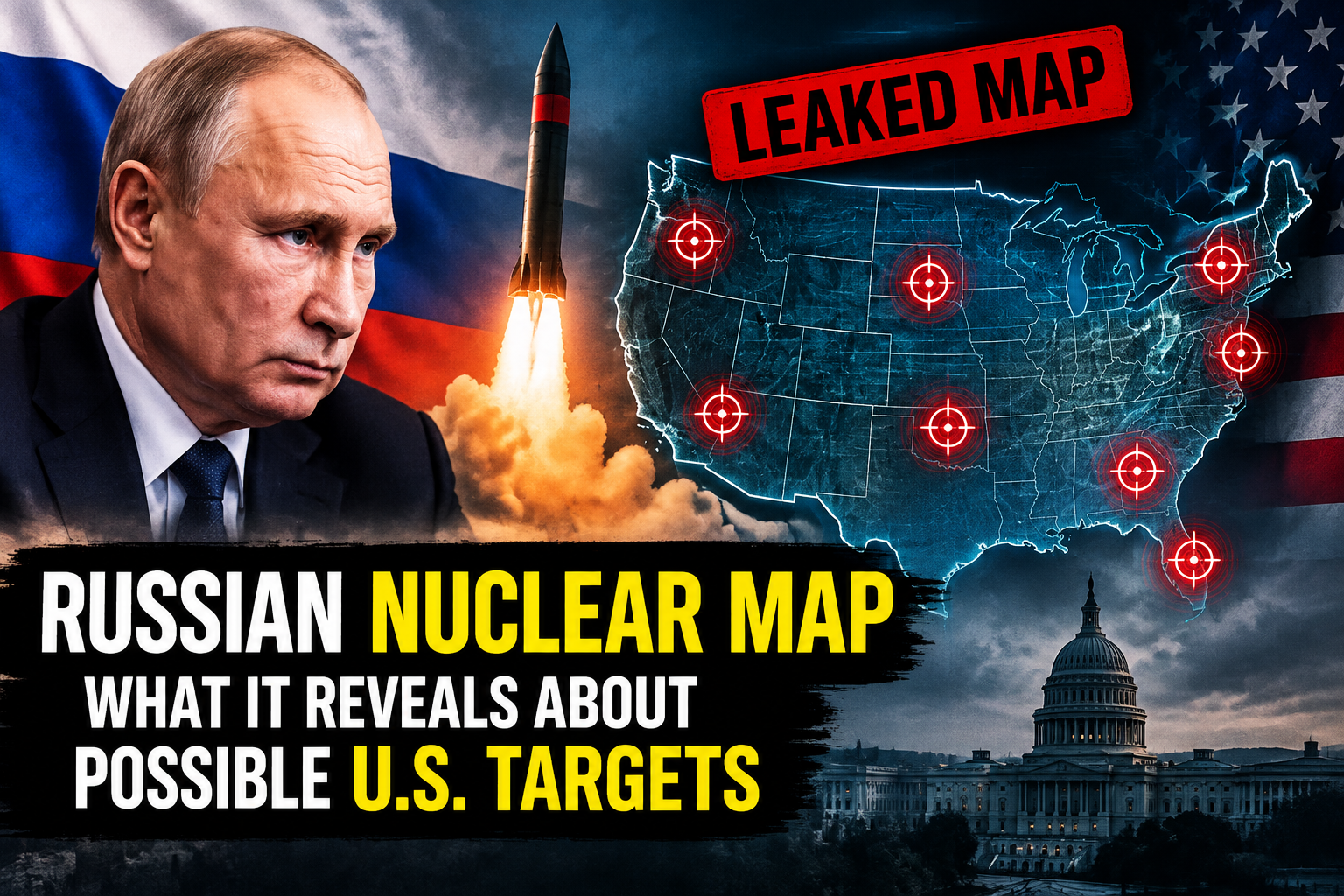
Recently, a controversial map linked to Russia began spreading across social media, with claims that it showed several strategic locations in the United States that could become important in a possible nuclear confrontation.
The map quickly gained attention, creating fear and questions about how nations prepare for worst-case scenarios. However, experts warn that such images must be examined carefully because online claims often mix real military information with speculation. Fact Check AFP
A Map That Sparked Global Attention
The discussion around Russia’s possible nuclear strategy is not new. Over the years, Russian officials and state media have occasionally highlighted hypothetical targets and military scenarios during periods of increased international tension. The Guardian
The latest viral claims focus on strategic locations that are believed by some analysts to represent important parts of national defense, communication networks, and military leadership.
These discussions do not mean that an attack is planned or that any specific location has been officially selected. Instead, they reflect the reality that major military powers study each other’s capabilities as part of deterrence strategies.
Why Strategic Locations Matter
Modern conflicts are not only about armies on battlefields. Countries also focus on:
- Military command centers
- Communication systems
- Defense infrastructure
- Nuclear-related facilities
- Transportation and logistics networks
The purpose of identifying strategic points is usually connected to military planning and deterrence rather than predicting an actual future event.
The Role of Nuclear Deterrence
For decades, nuclear weapons have shaped international relations through a concept known as deterrence.
The basic idea is that countries avoid using these weapons because the consequences would be devastating for everyone involved.
Russia and the United States possess some of the world’s largest nuclear arsenals, making communication and diplomacy extremely important during periods of tension. USNI News
How Social Media Changes the Conversation
In the digital age, a single image can travel around the world within hours.
Maps, military graphics, and old news reports are often reshared without their original context. Some images that appear to show secret information may actually be older graphics, estimates, or interpretations rather than official documents. Fact Check AFP
This creates confusion because viewers may not know:
- Who created the map
- When it was made
- Whether it is official
- Whether the information has been verified
Experts Warn Against Panic
Security analysts often emphasize that public discussions about nuclear weapons should be approached with accuracy rather than fear.
While countries do maintain military plans for different scenarios, those plans do not automatically indicate that conflict is unavoidable.
Diplomacy, international agreements, and communication channels remain important tools for preventing escalation.
The Bigger Picture
The viral Russian map represents something larger than just an internet story. It reflects continuing concerns about global security, military competition, and the fragile balance between powerful nations.
Rather than focusing only on frightening headlines, understanding the history of nuclear strategy helps people recognize why communication and responsible leadership remain essential.
Final Thoughts
The debate surrounding the so-called Russian nuclear map shows how quickly information can spread during uncertain times.
While strategic planning exists in every major military power, online claims should always be examined carefully. The future of global security depends not only on weapons but also on diplomacy, cooperation, and preventing misunderstandings between nations.